
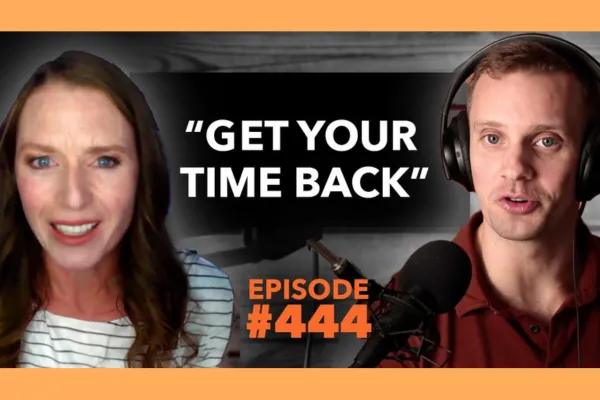
From Chaos to Clarity: Liz Chism on the Contractor Growth Network Podcast
>>> 🎧 Listen now
How to Build Systems That Actually Work, and Free You from the Day-to-Day
In this episode of the Contractor Growth Network Podcast, host Logan Shinholser sits down with operations coach Liz Chism to talk about one of the biggest challenges contractors face: running a business that depends on them for everything.
Drawing from her experience as both a brewery owner and a contractor coach, Liz breaks down how to simplify your operations, empower your team, and regain control of your time and profits.
Key takeaways from the episode:
Create systems your team will actually use. Don’t write SOPs in isolation. build them with your team so they’re realistic and effective.
Simplify before you scale. Cut low-margin services, unnecessary expenses, and underperformers so you can focus on what really drives profit.
Empower, don’t micromanage. Ask questions like, “What do you think is the best approach?” to develop your team’s problem-solving muscles.
Build trust through communication. Use tools like Google Docs to create living, shared processes that evolve as your business grows.
Know your worth. Track your time, calculate your hourly value, and delegate anything that doesn’t move the needle.
“Clarity creates profitability. When your business processes are clear, you’re more likely to achieve consistent, profitable outcomes.” – Liz Chism
If you’re ready to stop being the bottleneck in your construction business and start running a company that works without you in it, this episode is a must-listen.
🎧 Listen now: Contractor Growth Network Podcast – Episode with Liz Chism
Ready to let your business run without you?

Key takeaways from the episode
[2:57] Liz says she was working 100 hours a week in the busy brewery years.
[4:48] She got that down to about 30 hours a week and traveled with her daughter after pulling herself out of the day-to-day.
[16:16] She says she has scaled multimillion-dollar businesses on Google Docs. Documentation does not have to be fancy software.
[32:20] Cutting about $3,000 a month in expenses, at a 25% profit rate in her example, is like signing a new contract for the profit that creates.
[36:04] She talks about getting owner time down toward eight hours a week and says her first move is to chop owner time as fast as possible.
Questions answered in this episode
How many hours was Liz working before the change?
She says 100-hour weeks, then moved down to about 30 hours a week once she pulled herself out of operations.
Does she require fancy software for systems?
No. She says she has scaled multimillion-dollar businesses on Google Docs.
Why cut expenses early?
In her example, chopping about $3,000 a month at a 25% profit rate is worth as much as the profit on a new contract.
What is her first priority with owners?
Chop owner time down as fast as possible, including talking about getting toward roughly eight hours a week.
Full episode transcript
Transcript cleaned from YouTube captions. Speaker labels only where clear. Bracketed [unclear] marks uncertain words. Liz Chism's wording is kept as spoken.
[0:00] Host: Hey everyone, welcome back to the Contractor Growth Network podcast. I'm Logan Shinholser
[0:03] and today I'm joined by somebody who is an operations coach specifically for the contracting
[0:09] industry. I'm joined by Liz Chism and instead of me hyping her up and giving you her background,
[0:15] she's going to jump into it because as she was going through it all, I was like,
[0:19] let's just have you run through it because it makes so much sense as far as how she got into
[0:24] what she's doing now.
[0:30] Host: Liz, I appreciate you jumping in. Go ahead, kick
[0:33] us off. Give us your background. How did you get
[0:37] into coaching specifically around operations in the contracting space?
[0:42] So I'm going to take you back all the way to when I was nine years old, obviously prior to that,
[0:47] but my dad's a third generation contractor. So I grew up in the field. I grew up on the tools.
[0:52] Since I was homeschooled, I got the privilege to work with my dad on a regular basis.
[0:56] and it was better than doing chores at home because on the job site and on the tools,
[1:01] I could make money. So at nine years old, I'd do my schoolwork in the evenings and weekends,
[1:06] and I'd work with my dad. And I actually really enjoyed it. I loved all the different dynamics.
[1:11] I loved the art and the science. And by the time I was 16, I could plumb a bathroom,
[1:16] lay a floor and build a house. He would leave me on the job sites as the foreman
[1:20] and handle all of the operations. And even on the other side of that is I would help him with
[1:25] the bookkeeping side of things on those old, old computers that were like dinosaurs these days. I
[1:31] actually saw my one in a museum when I went on a field trip with my daughter and I was like,
[1:35] I'm not that old. But anyways, so that was kind of how I got into construction. You know, we've
[1:41] built many homes together. All my siblings were a part of it. We were kind of my dad's employees
[1:46] because we were very reliable and always showed up on time because we drove with my dad.
[1:50] So fast forward to when my husband and I got married, we started homebrewing and we
[1:55] wanted to start a brewery. Like all homebrewers, we think that we have most amazing beer.
[1:59] We actually did. We won quite a few international awards.
[2:02] We won tons of local awards.
[2:05] We won best to show at most competitions we entered in.
[2:09] And so most people, though, when they think of a husband and wife brewing team,
[2:13] and they think of a husband and wife starting a business together,
[2:15] the wife becomes the admin and marketing person, the one who sits behind the desk and does all the
[2:21] paperwork, you know, the financial stuff. And being that I had a background in operations and running
[2:27] job sites, I kind of default became the operations manager of our brewery. I designed all the beers,
[2:34] I wrote all the recipes. The unfortunate thing though, is that it was all stuck in my head.
[2:39] And I didn't know how to teach somebody the art and science behind brewing.
[2:45] Similar to construction, every job is a little bit different.
[2:49] And so there's this nuance between art and science that's really hard to communicate
[2:53] without understanding how to communicate it properly.
[2:57] So I was working 100 hours a week.
[3:00] I actually forgot, I was forgotten to be invited to my brother-in-law's 40th birthday party
[3:06] because we were so busy. And it wasn't until weeks later that they realized that they forgot to invite us.
[3:12] That's how busy we were. And when we wanted to start a family, we realized that 100-hour weeks is not the way to do it,
[3:18] especially with me being on the tools, in the brew house, doing everything.
[3:23] I would rewire pumps because I knew how to do all of that.
[3:26] So I had to revamp everything in our brewery.
[3:29] I had to put in what I consider an operating system.
[3:32] So a lot of times businesses have separate systems.
[3:35] They have a system to do. their marketing. And that's got a lot of subsystems. And they have a system to do their
[3:42] sales. And they have the system to fulfill the job and actually do the work there. But there's
[3:46] all these holes in between everything. And then you add this arts component to it where every job
[3:51] is different. Every beer we brewed is different. And when I'm talking about the nuances in beer,
[3:57] we're talking about mashing a beer at 147 and it
[4:01] not tasting good if that beer is mashed at 148
[4:04] degrees. Like we're talking very, very specific on how
[4:08] to do things. And so, you know, similar to
[4:12] construction, you really have to have good processes in place. But even with good processes
[4:17] in place, there's all these black holes in between each process that the owner ends up filling. They
[4:23] fill in the gaps between different things. You know, my brewers would brew and then I would come
[4:29] in and check the beer and make sure it was all good and, you know, do all this micromanaging to
[4:32] make sure everything was fine. And as a new mom, I didn't have the opportunity to do that. Like I
[4:37] had to have systems and processes in place and an operations on how to tie everything together
[4:43] to actually pull myself out. And that's exactly what I did. I went from a hundred hour weeks
[4:48] down to about 30 hours a week. We traveled all over the world with my daughter. We,
[4:53] because as a brewery, we distributed locally, we had a tasting room, and then we also distributed
[4:59] nationally and internationally. So our beer went all over Europe, our beer went to Japan,
[5:04] our beer went to China. And so we actually
[5:07] got an opportunity to fly to China. And in China,
[5:11] Google doesn't work. So your Google documents, your Gmail account, any way to really communicate
[5:18] with your employees is non-existent. And so we
[5:22] had to set up our systems and our operations
[5:26] in a way that removed us from the day
[5:29] to day. They had to answer questions on our behalf
[5:33] based off of us not being there. And so we put in processes in place where we could,
[5:38] we're gone for two weeks in China and
[5:41] nothing happened wrong. Everything was great. Our sales
[5:46] went up. There was not a glitch that happened. And we came back and we were like, this is sweet.
[5:52] Like we just did it. We just spent two weeks
[5:55] with no contact of our business and it thrived without
[5:59] us. And so not too much longer after that, we decided to actually get out of the brewing industry
[6:04] and contractors, because that was my background, started seeing the type of systems that I put in,
[6:12] which is a little bit different than most people put in and saw the operating system and was like,
[6:17] okay, how'd you move from a hundred hour weeks down to 30 hours a week and got your life back?
[6:22] How were you more profitable by being out of the business operations than you were micromanaging
[6:28] the business operations? How did you get your employees? Cause we had a team of 16 employees.
[6:33] You know, how do you get your employees to do things the way you want them to be done without
[6:38] you checking in on them? And so that's kind of how I got into the construction world.
[6:43] obviously I was very familiar with it and my husband's dad is also a third
[6:49] generation painting contractor and my husband has a degree in construction so
[6:53] it just kind of became a natural thing to continue and to help contractors
[6:58] really get out of the day-to-day operations when construction is a blend
[7:03] of art and science so one of the things you brought up about like the whole idea
[7:07] of art and science is like the nuances associated with all the things that I
[7:12] I mean, every business has them.
[7:15] In the brewing space, before we jump into the contracting side, I'm curious.
[7:19] Whenever I watch the great British baking show and stuff like that,
[7:25] they'll taste it and be like, you should have let this thing stay in the oven for 14 more seconds
[7:30] and add a touch more time and you're there.
[7:33] That, to me, when I watch people do that,
[7:35] when it comes to tasting and stuff, were you at that level when it comes to you can taste your beer
[7:40] and be like, we need to add this much more hops.
[7:43] And like, hey, if we like cook it at like this temperature a tiny bit more, we're spot on.
[7:49] Yep. So prior to us actually starting the brewery, my husband and I both became certified beer
[7:54] judges, which is the beer version of a Cicerone in wine terminology.
[7:59] So we could actually tell the difference between
[8:03] what beers tasted like what and specific tastes
[8:06] and what they contributed to in the process to brew them.
[8:09] Uh, we could also tell the difference between different hops and what years they were harvested at.
[8:15] And I would purposely not buy hops if they were certain years or certain regions,
[8:20] because I didn't like the taste, even if the variety was the same.
[8:25] So yeah, we were at that level.
[8:27] We did a lot of barrel age stuff. And so we would go through, you know, 14 different barrels and be like, I'm only
[8:33] going to do barrel two and barrel nine. And that's it.
[8:36] The rest are going to have to age longer. So yeah, I was at that level.
[8:41] And is that something that like when you're talking about, you know, you're away in China
[8:44] for two weeks, to me, it's like, you know, some of the systems that you have to put in
[8:49] place are a little bit more straightforward, but something like that, where if they cook
[8:53] it wrong, or if one little thing is off, like now all your customers are tasting a different
[9:00] beer than what they're expecting. Is that something that you and your husband were able to teach?
[9:05] is that more of like that specific thing still kind of came back to you guys having to be there
[9:10] to really like use your own taste buds to figure out what's what so when people put in systems and
[9:17] sops they think of them as a one-time act
[9:20] here's this piece of paper here's that piece of paper
[9:24] read the piece of paper follow the piece of paper and i'm going to check out for the next year and
[9:29] what you have to think about is how do you make something sustainable? So every day, I wasn't the
[9:36] one trying the beers. Every day, my brewers were trying the beers when I did hire a full brewing
[9:40] team. They would go through and check, does this one need one more day? Does this one need 12 more
[9:46] hours in the tank? Does this carbonation level taste like what the carb levels should be like
[9:52] for this style of beer and all those different stuff? And that's where as a business owner,
[9:59] you actually kind of want to act dumb. And I know it's hard to say it that way, but if I were to
[10:04] constantly just tell my brewers what to do and how to do it, okay, do this, leave that in the tank
[10:09] for 12 more hours, do this, whatever. I'm
[10:13] now the transactional leader. Every time they need
[10:16] something or every time they taste something or every time they need to take that next step,
[10:21] I have to be there to approve it. And I had to pull myself out. So I would say, well, what do
[10:26] you think? Do you think it's ready? Is the room in the brewing schedule? Are we on a deadline?
[10:33] Like I would just ask those questions and play dumb and it got them to think critically and to
[10:39] start understanding the end result and what their
[10:43] decisions will affect. So if I was like, okay,
[10:46] do you think that this beer is done? And they're like, no, it kind of needs one more day. I'm like,
[10:51] do we have time for that one more day? Are we on deadlines? Like what do we need to do?
[10:55] And so I would even be at home, you know, being with my newborn baby and I'd be on
[11:00] the phone with my brewers and I would just have to walk them through.
[11:03] I'm like, do you taste this flavor? Nope. Do you taste that flavor?
[11:07] And so when we got to that point of being gone for two weeks, it wasn't like I had
[11:12] always been the middleman. And then I pulled myself out for two weeks and then I jumped back in.
[11:17] We would actually way prior to spending two weeks in China, we actually would just
[11:22] leave for a day and stay at home.
[11:25] like we were never out of town. We were just there. And we would say, what broke? What system
[11:30] broke while we were gone? Not who broke it, not who did something wrong, because now we're blaming
[11:35] the person. We want to be team members with our employees. We want to be on the same side
[11:40] and be against the system. Like, is the system going to work or is it not going to work?
[11:46] And so we'd come back the next day and be like, what broke? And they're like, well, we followed
[11:50] it this way, but it didn't produce this result. And we're like, okay, cool. And then we go in
[11:54] and fix the system, not fix the employee.
[11:58] Because if you're going to be there trying to fix your employees, your employees are probably going to find another job somewhere else.
[12:04] And so one of my good buddies owns a brewery here,
[12:07] and we talk a lot about this stuff. And they're actually, one of the guys, one of the owners is a master of Cicerone. So I know they're very big into like
[12:14] making sure stuff tastes well, but talking with them,
[12:18] brewers from what I've heard are artists.
[12:21] So when you're coming in and you're trying to tell them, hey, this is off, or you're asking those questions,
[12:27] if you do it in the wrong way, it's almost you're telling an artist or a craftsman, hey,
[12:31] what you just created, is that up to par? Is that
[12:35] actually good or not? So can you talk a bit more
[12:39] about the balance of asking those questions
[12:42] and making sure that you're communicating without
[12:46] overstepping and feeling like you're essentially just telling them, hey, this is wrong and
[12:51] potentially crushing morale? So there's a difference between asking a question in judgment
[12:58] and asking a question, assuming the answer and just waiting for that validation from them.
[13:04] And there's another side of it of asking the question of just being curious. And when you
[13:09] can define those two, curiosity will get you much farther with systems than anything else.
[13:14] So one of the questions that I ask any new client that comes working with me,
[13:19] You know, usually they're a builder remodeler there in the trades of some sort. And I'm like,
[13:24] okay, let's play the curiosity game. Let's shift out of just, well, this is wrong and this is wrong
[13:29] and this is not going right. And this employee is doing this. And all of a sudden we're just
[13:33] thinking in the back of our brain, which is where the fight or flight comes into play.
[13:37] And then we're just stressed and we can't actually look at our systems. And so I'll ask them, I'm
[13:41] like, okay, so, you know, let's be curious. Like I'm
[13:45] curious about if we could put in a CRM that
[13:49] would actually follow up with leads, right? You know, I wonder if we could get a team to the point
[13:54] where all of us actually work together. Great. Like when you start putting in that curiosity
[14:00] instead of just, well, this is how I do it. And I'm going to like ask you a question just to,
[14:06] you know, get you to admit that you're wrong, then we're approaching it wrong.
[14:09] And so this is where I would just ask my brewers, especially since I wasn't there.
[14:15] I had the convenient excuse to not be there early on when I had a baby.
[14:19] And I'm like, you have to be my ears and eyes.
[14:22] I am not there to taste it. And that actually was really helpful for them because now they had to step into that
[14:29] role and really think about it.
[14:31] I wasn't that crutch that they could just fall on and hope that it all went well.
[14:35] Can you talk, you talked about this before, but talk a bit more about the idea of it's
[14:40] you and the person versus the system where the bad guy is not the employee or the way that
[14:47] something's being done by that employee, but it's really more the system as a whole.
[14:52] So when owners want systems in their
[14:55] business, they typically have a business that's chaotic.
[15:00] It's typically not making a lot of money. The owner is typically working a ton of hours
[15:05] and they don't know which way's up.
[15:08] They don't know where to start. They don't know which to tackle. And so they think that they need this beautiful piece of paper that's their SOPs.
[15:16] And if they just had SOPs and they just had systems,
[15:20] all their problems would go away. So they may get a system from someone.
[15:24] They may download something from the internet.
[15:27] They may throw some stuff into ChatGPT and they present their employees with a piece of paper.
[15:33] This piece of paper then becomes something that is a thorn in their flesh.
[15:40] You know, they hate it. It's like, oh, so now I've got a piece of paper as a boss. Now I have to do this.
[15:44] We didn't talk about this. I don't know. This doesn't work.
[15:46] Don't you know that we don't do it this way?
[15:49] And so when SOPs or standard operating procedures are created in a vacuum, it really makes it
[15:55] difficult to be in collaboration with your employees.
[15:59] And one of the hardest things with putting in systems and with putting in SOPs is
[16:04] getting your employees to adopt them. And so when you create this nice fancy piece
[16:10] of paper or a document or you have Trainual or ClickUp or whatever it is that you're going to use.
[16:16] I use Google Docs. I've scaled multi, multimillion dollar businesses on Google Docs,
[16:21] so you don't need to get fancy with your systems. But when you take that and you
[16:25] just hand it down to your employees, you're very much in a authoritative
[16:29] dictatorship type role. And your employees are going to look at that piece of paper,
[16:34] scan it once and throw it out the window and keep doing the things the way they want to do.
[16:39] And so the way you collaborate with them is by asking questions. And that's where just staying
[16:45] curious. A lot of times SOPs have this idea of
[16:49] a laundry list of to-dos. Do this, don't do this,
[16:54] wear this type of clothing. My favorite example, somebody handed me an SOP a couple months back,
[17:00] and it was a SOP that had a huge laundry list of stuff to do. Half of it I would never have
[17:06] remembered. And one of them was put cones by trailer if parked on street. I'm like, okay,
[17:12] cool. Like that's a nice thing to talk about,
[17:15] but why, why are we putting cones on the street?
[17:20] I mean, I don't know. You tell me. And so if you reword the question to actually be the outcome,
[17:27] now you can get them to start thinking about stuff. So I would reword that is how do we create
[17:34] a safe job site? And then they can answer that question of how we can create a safe job site.
[17:40] One painter I worked with, he was a commercial
[17:44] painter, huge team, like 30, 35 people. And he
[17:48] was trying to implement his values into his business. And one of his values was servanthood.
[17:53] And I was like, okay, well, what do you mean by that? Like, what does that actually look like?
[17:57] And so they actually created an SOP of how do we show that we are, you know, showing servanthood
[18:03] or being a servant to each other on the job site?
[18:07] How do we show servanthood with our clients? How do we do this?
[18:11] And then their employees started realizing what that actually meant and how it played out.
[18:15] You know, if you say, hey, look, our values are servanthood, nobody is going to understand what that means.
[18:21] And so then they solidified that by doing acknowledgements,
[18:25] which is another thing that I teach contractors
[18:28] is how to actually acknowledge somebody for who they are.
[18:30] And so on their quick morning meetings,
[18:33] they would do one acknowledgement. And there was this one time after we'd been working together for
[18:37] a while where one of their other employees acknowledged another employee and said, Hey,
[18:42] I just want to acknowledge you for you showing for servanthood because we were painting an old
[18:47] folks home. And, you know, yes, we had a path cleared for people to come in and out of the
[18:52] building, but it's still a little confusing for, you know, an 85 year old grandma, who's not quite
[18:57] sure where she's supposed to walk to get inside the building. And this guy dropped his painting
[19:00] brush and put everything aside and walked the lady to the front door and let them come in.
[19:06] And so that was shown in their business as what they meant. And it started with asking the
[19:11] questions of what does it actually look like for us to be this way? What does our job site look like
[19:16] when we're doing our values and showing forth our values? What does our job site look like
[19:21] when we're working with a customer and we want them to refer us to five more customers?
[19:27] What are we actually doing that's going to get us that result?
[19:31] And so when you put the result in the question, you can now be curious about what's going on.
[19:36] You can get feedback from your employees. And now they understand what the outcome is that you want to achieve in your business.
[19:43] And you don't have to put this laundry list of to-dos that they need to do that
[19:47] they're never going to read. You can start seeing the results based in their business.
[19:52] And I mean, I do this even if you're not going to share it with your employees of
[19:56] just understanding clarity wise how your business functions. Okay, a lead comes in.
[20:01] What is the next step? Will that help a client? Yeah, will that help a client move to the next step? Like all those questions.
[20:09] When you're asking these questions to your employees, I guess from like a trust
[20:15] perspective, if you will,
[20:17] how does it factor in when like you have your employees that you're like you don't know if
[20:22] they're the right fit because i remember like when i first started my company like this point
[20:25] like our core values like we sat down as like a leadership team and went through them over the
[20:29] course of like three or four weeks of like meeting after meeting after meeting talking about what it
[20:33] actually mean how do you define that but i know when i first started it was just like we took a
[20:38] poll and we were like hey what you come up with five you come up with five you come up with five
[20:42] and we just figured out whatever has the highest amount of votes was what we're going to adopt and
[20:47] it turns out that two of the four of us
[20:50] weren't even at the company anymore a month later. And
[20:54] we had these values that those two people, because they both voted on it, valued and the two remaining
[20:59] ones didn't. So when it comes to these actual asking the right questions of if we want to
[21:05] produce, I don't know, the least amount of slippage on this job, what can we be doing?
[21:12] Do you have to have the right people and you know for a fact you have the right people in place
[21:15] first or is it a lot of times you don't really know but the fact that the environment has not
[21:20] been set up properly for them which once you start to go through these sop questions then it'll start
[21:25] to really come out of is this the right person and approach or not so that's where sustainability
[21:31] comes into play so again sops are not a one-time act but when they are based on questions and i
[21:37] always actually just type out a bunch of questions and then we answer them on a document so that way
[21:41] it is all recorded as an sop it's just worded differently and rearranged differently um
[21:49] and if you think about like google and chat gpt and stuff we always ask it questions so why aren't
[21:53] we making our sops like that so anyways uh when you have those questions documented you can go
[22:00] back through and ask the same question you know if you ask okay who is your perfect client to work
[22:07] with a year ago it may be different than when it is today but if you ask that question again you're
[22:13] going to get a different answer or a more clarified answer so those are types of things that you can
[22:18] review on a weekly or monthly basis of like let's go through these questions that are about customer
[22:24] service okay we've gotten a couple of referrals but what can we do differently to get more referrals
[22:30] who are our ideal clients are we not working with the people that we really should be working with
[22:34] Are we not doing the jobs that we need to do?
[22:36] And so when you constantly are asking those same questions, then you can start getting
[22:42] different answers and morphing your business to match the culture that you're creating
[22:47] on a regular basis. Learning is not just acquiring knowledge.
[22:51] Learning is having the same circumstance but having a different behavior.
[22:56] And so if you have the same question and you have a different answer, you're now learning
[23:00] as a company on what you want to do and not do on a daily basis.
[23:06] Do you get a lot of pushback from people of, well, there's not really a point to do this,
[23:11] you know, document this SOP or this system or the way that we're doing it now, because
[23:14] we know it's not the best way to do it.
[23:16] So let's figure that out first. Then we'll sit down and do these questions.
[23:21] So that's where I feel there's an operation system versus just SOPs.
[23:26] and I think about systems and your operations
[23:30] in four quadrants. So the first quadrant is your
[23:34] systems that work. They're great. Things are moving fine. Leave those alone. Just don't,
[23:40] don't document them yet. They're fine. Just leave them alone. Don't waste your energy on them.
[23:44] The second quadrant are all of your systems that you know don't work. You're like, okay,
[23:48] we're not converting as many leads. We're not getting as many five-star reviews. We're having
[23:53] employee turnover. We know that there's these issues in our business. We're not sure what to
[23:57] do with them, but we know that they're there. Then there's the third quadrant, which is all
[24:01] of the systems in your head. And this is where most business owners get stuck because trying
[24:05] to communicate that out is very challenging. And then the fourth quadrant, I call it the dumpster
[24:11] fire quadrant, where you don't know what you don't know until you know it, or the can of worms. You
[24:17] think that everything's fine and then you realize that it's a nightmare and so when you think about
[24:24] it that way anything that's in your head needs to be put out on paper and those questions need to be
[24:30] asked you know even sitting your employees around and just saying ask questions and having those go
[24:35] through i even advise my clients to while they're in the car driving from job site to job site which
[24:41] they're currently doing is to record different answers to different questions like why did you
[24:46] start your business? Why do you do things the way you're doing and have those recordings?
[24:51] So that way you're starting to get everything in your head out and everybody can do it. As far as
[24:56] the systems in quadrant two, this is where you need to really hone in on what is the micro system
[25:02] that needs to be put in place. And if you think back to the British cycling team, they didn't just,
[25:08] okay, let's cycle faster. It was, what are those 1% improvements that we can do? And so when you
[25:13] narrow it down to trying to find those 1% improvements, you can really help your systems.
[25:20] I love technology. I have a robust CRM system. I have, you know, different, I have VAs. I have
[25:26] different things like that, that work together to make my business run, but I'm not a first
[25:31] technology then try to fix everything else. And I always try to simplify things. So if you can
[25:36] think about what is the easiest, fastest, quickest way to fix this problem, let's fix it first,
[25:42] make it something that we want it to be, and then we can fill in it with technology,
[25:46] with a software program, with an app. If you have
[25:50] your employees just email or write on a piece of
[25:54] paper that's in the truck, they're ours and they're not doing that, you adding in an app
[25:59] is not going to make them do it. You have to fix the operations of how they do that system.
[26:06] Then you can, of course, add an app and it'll make it a lot easier, but that's not the first
[26:10] answer to everything that's going wrong in your business we we do that a lot here where we talk
[26:15] about that of um like right now we have a project management software that we've been um slowly you
[26:21] know rolling out over the past six months and i remember ahead of time before we we got into this
[26:27] specific um software a lot of the answers of like well why aren't we doing it this way it's like
[26:33] well money.com which is the software is going to solve it for us and it's like hold on if we're not
[26:38] even writing this down ahead of time like that's just going to make what we're already doing easier
[26:43] but if we're now say it's almost like the person on the team saying hey if you if you promote me to
[26:49] a leadership role then i will start to show leadership qualities versus i'm not going to
[26:55] promote you unless i can already see that you're doing it so we have discussions around that over
[26:59] here around let's actually figure out what needs to happen first and then you implement the
[27:03] technology to then make it easier, faster, simpler, things like that versus it's the same thing.
[27:09] We do marketing and if we build somebody a website, they think that, oh, once my website's live,
[27:14] all my business problems are solved. And it's like, well, look, if you're not telling people
[27:19] that you actually do this service or you own a remodeling company, a website is going to help
[27:25] for the other people. But realistically, you need to get yourself out there first and then
[27:31] let the website kind of be the place that you can send people back to but using a software technology
[27:36] is not the end-all be-all um and i know we experience that as well where we talk about that
[27:41] of like do we need the software or do we just need to figure out a better way to do it first then
[27:45] figure out the specific software that's going to help that problem instead of just trying to solve
[27:50] the underlying issue which is we're just not doing it yeah and a lot of times it comes down to
[27:56] clarity. Like I say that clarity, it creates questions, create clarity and clarity creates
[28:03] profitability. So when you are very crystal clear on what you do and how you do it, you will be more
[28:09] profitable without even writing a single SOP. So I recently had a client that came in, joined the
[28:15] program. He wanted SOPs, he wants systems and which is kind of a vague term in general. And so I was
[28:22] like okay and so we started working through the
[28:26] first step that i do is getting more leads making
[28:29] more money off of each leaves and turning those leads into profit machines and we're like okay
[28:35] you're getting a lot of leads you're getting repeat business let's focus on your numbers
[28:40] and just yesterday he was like yeah i just got off a call or out of an appointment with a client
[28:47] And prior to working with you, I would have made 50 to 60,000 on this job.
[28:52] And I just signed a contract for
[28:54] 106,000 because I asked questions around his pricing
[28:59] and how much he was paying, how much he was charging, how much he was making, what does
[29:04] his jobs look like at the end? So when you are curious, even if you don't write it down, but just creating crystal clear
[29:11] ideas of what your business does and how you do it can make you more profitable.
[29:16] and then you can go hire somebody to make you SOPs if you want.
[29:19] But that's not the point. The point is putting in systems and processes that create profitability.
[29:25] Yeah, we had an ops manager a few years ago.
[29:28] And the first thing that she did was she came in and created SOPs for everything.
[29:32] And I don't think I've ever looked at them.
[29:34] And I don't think anybody's looked at them.
[29:36] If I went back and look, I'm like 99.9% sure that 100% of it is no longer accurate.
[29:43] And it was really more of like check in the box of like, yes, we have SOPs versus
[29:47] like actually figuring out like, okay, why do we do it this way?
[29:51] And like, let's go through step-by-step. And it's like, we do this with our own sales process of a lead comes in.
[29:57] What's the connection rate? Meaning, you know, instead of just looking at how many leads to jobs closed are we doing?
[30:03] It's what are the step-by-step processes to optimize along the way to go, okay, if
[30:07] our issue is, you know, it's a big drop-off between a lead coming in and how many
[30:11] people are actually getting in contact.
[30:13] with what can we do to solve that individual thing?
[30:15] And it over time starts to increase the actual amount
[30:19] of sales coming through. So I've been there in the boat of like,
[30:23] let's create the SOPs because it's almost like the thing
[30:26] that you say you're supposed to do as a non-operations person.
[30:30] But in reality, like it's a waste of time. It's a waste of money.
[30:34] And like nobody has bought into the point that like,
[30:37] it took me 15 minutes just to figure out where the SOPs even were, which sucked.
[30:42] yep that's why my book that's coming out soon it's called sop suck so where do you start then i mean
[30:49] like what is this like a hey you want to sit down you're the owner of a company and you want to
[30:55] spend two days and go through every single you know system quote unquote or thing that you do
[31:00] and ask the questions or is it more of like as time goes on little by little you're starting to
[31:06] ask these questions and start to figure out what's going on so i have a five-step process
[31:12] And the first one is simplify. Make your
[31:15] business as simple as possible. If you're doing remodeling
[31:19] and sunrooms and kitchens and baths and an addition,
[31:24] look at all of the things that you do
[31:27] and narrow it down to your most profitable jobs. You will make more money and you can always add
[31:33] those back later, but we've got to start simplifying your business and make it less chaotic.
[31:38] Simplify your team. You probably have people on your team that are just weighing you down.
[31:44] A players don't like to associate with C players. And if your business has a lot of C players,
[31:49] your A players probably look like C players. And so really going through and being like,
[31:53] does this person make this business money or does this person cause me to spend more time in the
[32:00] business and weigh our business down? You can look at your finances. Let's say you go through
[32:06] your finances and you look at your credit card statements and you're like, oh, I don't use this
[32:10] software. I don't use this app. You kind of gather things up. Maybe you let go of an employee that's
[32:16] not performing high enough for this next level. They got you to where you are, but they're not
[32:20] going to help you get to this next level. So you add that all up. Let's say you chop like $3,000
[32:25] from your monthly expenses. If your profitability is
[32:31] 25%, that $3,000 is like signing a contract
[32:35] for another 12,000 because that 3,000 is from profit. That 3,000 is not revenue. And so when
[32:42] you start thinking about narrowing down what you're spending money on, you can free up your
[32:49] finances to the point where you have that breathing room and you can go. Once you free up and simplify
[32:54] things, then you need to create a strategy. And the
[32:59] strategy is how do I solve the next kink in
[33:03] my business, whether that's getting more sales, whether that's getting more referrals, whether
[33:08] that's your job costing, those are usually some of the big ones. And so we do an audit and we see
[33:14] where our systems and what's working, you know, rate
[33:18] them from one to 10. When we can really see
[33:21] what's working and what's not working in our business, then we just focus on that, you know,
[33:26] as a squirrels and visionaries, you go, oh, but this is, you know, the shiny object and I want
[33:32] I go do this over here. But I have a cool opportunity over there. You really just have
[33:37] to have that discipline and focus on what you want to focus on. The other thing too is that
[33:41] because maybe sales and marketing is more of
[33:45] a strength for some people than let's say your
[33:49] finances, people tend to try to make these 1% improvements in the areas that are already doing
[33:56] pretty good. And so you want to force yourself to go find those things that are not working very well
[34:02] and put them in place. And then the third thing that you need to do is systemize everything,
[34:07] which when I say systemize, I actually mean create clarity. So where do we not know or what's not
[34:13] answered or what questions do we still have around this particular area? And so when we can ask those
[34:19] questions, whether it's, you know, how do we close on a job so that way we're on time? You know,
[34:26] how do we put in a punch list that can get the
[34:29] job done faster? You know, how do we hand off the job
[34:33] to a client and have them give us rave reviews and, you know, give us a five-star review and
[34:39] referrals and all this type of stuff. Like what are those tiny micro strategies we need to put
[34:43] in to create clarity? And then the next thing is how do we make it sustainable? So sustainability
[34:48] means make it a habit. If you think back to, you know, as you as a child, your mom taught you how
[34:55] to brush your teeth. Okay, let's come in, brush your teeth. This is how you do it. She helped you.
[34:59] And then now you don't need your mom calling you every night to brush your teeth. It's a habit.
[35:04] You do it every night. You do it every morning. That's what you do. And so you want your systems
[35:07] to be the same way. And when you think of your business running like brushing your teeth,
[35:12] you don't think of it as a one-time act and you keep going and then you just circle back around
[35:17] and do those things. And that's how you scale. So when somebody starts to work with you,
[35:23] is there like a starting point where it's always like, Hey,
[35:26] we're always going to start off with, you know, like lead intake.
[35:31] Cause that's an easy one to solve and get quick wins. Or is it really,
[35:35] everybody's coming to you with, with nuance problems that you then have to do like a deep dive to figure
[35:41] out, Oh, you're starting here. So let's go there.
[35:43] Or is it all pretty common from where everybody should be starting from a
[35:47] system perspective?
[35:49] Every contractor needs more time. So I always start with time because I can't go and tell you to ask your employees these questions
[35:58] or to, you know, be on a call with me if you don't have any time and you're working 60 to
[36:04] eight hours a week. So my first thing is to chop your time down as fast as possible.
[36:08] And then after that, it usually means hiring someone for your job. Usually there's either
[36:15] an admin you're missing or you're missing some type of, I call them like a job site admin,
[36:20] either a crew leader, a foreman, superintendent, somebody who can be on the job site. They may not
[36:25] be at the level of a project manager, but they need to be there to wait for the inspector to come
[36:30] so you can get your permit signed off on and wait for the materials to be delivered. They're just
[36:36] sitting around and you need to find somebody that can do that that's not you, even running errands.
[36:42] Most contractors run errands for their team because, well, I was by the supply store,
[36:47] So I'm just going to pick it up and drop it off here and run over there.
[36:50] And it's all these little tiny things that are wasting their time.
[36:54] So usually it's putting in another employee.
[36:57] Sometimes it's two employees to get them freed up.
[37:02] And then from there, you know, about once a month, I ask, okay, what's your goal?
[37:08] Where are you now? And what's blocking you? And almost always they know what's blocking.
[37:13] And we create that strategy, that micro strategy to solve that.
[37:17] Sometimes it's creating clarity by asking questions.
[37:20] Sometimes it's just things that they're avoiding.
[37:23] But every time we move the needle forward, but they actually have the time and the bandwidth to do that once they have the people in place. So you just brought something up that is interesting
[37:31] where when you're talking about going and running back and forth to Home Depot yourself
[37:36] because you forgot something, how much of that in your opinion, Liz,
[37:40] is them just not realizing that somebody else should be doing it versus that's their comfort zone.
[37:46] And there's other things in the business that if somebody else goes and does that,
[37:50] they have to now do this uncomfortable thing for them.
[37:53] So they're just using this cop out of, well, I'm just going to run to Hope Depot
[37:56] because essentially it's kind of like hiding behind the problems that actually need to be solved.
[38:00] I would say it's a little bit of both.
[38:03] I think people are so concerned with the job and the job site and keeping the job
[38:07] going that they'll do anything to keep the job going because that keeps the lights on.
[38:13] And a lot of times they don't stop to think about what they need to be doing to keep
[38:18] the lights on versus what they currently are doing to keep the lights on.
[38:23] I usually do an exercise with my clients on going, how much money do you actually want to make?
[38:28] Like your ideal income from your business.
[38:31] How many hours do you want to work each day?
[38:33] How many weeks of vacation do you want to take?
[38:36] And it pops down a number of what their time is worth.
[38:40] Not what they're getting paid, but what their time is worth.
[38:43] and a lot of times it's between like 180 to
[38:46] 250 dollars an hour and I'm like okay what are you
[38:50] doing that's not 180 to 250 dollars an hour
[38:54] and they're like uh running to Home Depot I'm like
[38:57] yes so we are not running to Home Depot anymore the 10 an hour 15 an hour person they can run to
[39:04] Home Depot the job may be longer but I can guarantee you you'll free up your mental bandwidth
[39:10] it and matching your energy levels and what you can handle with the things that you need to do in
[39:16] the business actually will create more time because not 24 hours is created equal you know
[39:21] some people are morning people some people are night people some people are middle of the day
[39:24] and so if you're in your peak zone and running to home depot you're not actually leveraging
[39:30] your energy levels to match what needs to happen in the business so one of the things you brought
[39:36] up earlier back when you're talking about like the brewery and um was brewer would go out you know
[39:42] brew a new batch and then you would like ask them almost like is it good like how is this it's almost
[39:47] like you're like letting them in a very contained
[39:51] way fail and you're letting them learn on the job
[39:55] as they're doing this how do you approach that with clients that you're working with where are
[40:00] you are you telling them like hey let your people like figure it out and
[40:03] unfortunately they're gonna on the job site and they're you know you're gonna i don't know mess up some people's in you know
[40:10] homeowners like situations a little bit but your team is going to learn because i know that's a big
[40:15] fear like what you just brought up of like they want to keep the job site running they want to
[40:18] keep it like rolling and the biggest fear is that we screw something up on the job site and then we
[40:23] got to go back to the homeowner be like hey i'm so sorry i just started working with liz and she said
[40:28] i gotta let my people fail a little bit so how do you approach that with the team so there was a
[40:34] lady who did a study in Stanford that took half
[40:38] her class and gave them 10 songs that were the
[40:42] top songs of the year. You know, everybody listened to these songs. They were always
[40:47] up playing on the radio and in stores. And then she gave the other half the class the ability to
[40:54] listen to these songs based off of the class tapping it out. And so you'd have student A
[40:59] tapping a well-known song and student B trying to
[41:03] guess what that song is. And they assumed that
[41:07] since these songs were prevalent throughout all
[41:10] society, that they would therefore guess the song.
[41:15] So they estimated like 50 to 60% of that communication happened through tapping.
[41:20] And the reality is, is that only two to 3% of the students guessed the right song. And the thing is,
[41:27] is that we have the accompaniments in our head. We can hear the music, we can hear the drums,
[41:31] we can see all the musical instruments, the voice, the words, we can hear it in our heads.
[41:36] But then when we tap, it's only two to 3%. And so a lot of times when contractors try to tell
[41:43] their employees what to do, and then they leave to go do something else and they come back and
[41:48] they come back to chaos and needing to put out fires and appease the client, it's because they've
[41:53] only really communicated two to three percent and so taking a moment to figure out all the questions
[42:00] that are going to be asked and really thinking about it from an output standpoint like what is
[42:06] the outcome of this like what does need to happen you know input we do these actions output what is
[42:11] that going to result and so when you think about it and it doesn't take that long but it's making
[42:17] sure that you're asking all the right questions so you're communicating that once they actually
[42:22] know what's going on, it's much easier to leave them at the job site. There's a guy that I work
[42:27] with who does spray foam and insulation and fiberglass and everything like that. And it was
[42:33] always like, well, it depends. I'm like, well, it depends on what? Well, you know, it depends
[42:38] how big the house is. I'm like, okay, so if it's a two-story house, is that different than a single
[42:42] story house? Well, yeah. I'm like, okay, so is the process on every two-story house similar?
[42:48] Well, yeah. I'm like, okay, you know, what do you actually do?
[42:52] Well, we do this and this and this. And he named off 10 things. And I was like, but it sounds like I'm actually only hearing three.
[42:58] So it's two-story house or a single house.
[43:01] It's this or this or this.
[43:04] And then when he started creating that clarity of what exactly it is, I'm like, okay, well,
[43:09] where do you start in a two-story house? He goes, the farthest point in the house.
[43:13] I'm like, okay, so you go up the stairs, you go down the hall and you go to the last bedroom.
[43:16] He's like, yeah. I'm like, okay, then that's your process. But it took somebody asking those questions because
[43:22] just telling your guys show up at this house and spray foam the house is two to 3% of the
[43:28] information. And then you're going to come into this house and it's going to be an absolute
[43:31] disaster because they didn't have the right tools and information that they needed. So I always say
[43:37] that SOPs or systems or processes that answer the most questions are the most effective.
[43:42] So if your guys still have a ton of questions on what to do and how to do it and
[43:46] they're texting you, that means you didn't actually communicate the two to three
[43:51] percent. And so, you know, have that open communication, have that open dialogue and
[43:55] really create that trust with your clients or with your employees.
[43:58] and it does take a little bit of time, but it's so worth it in the end when you can show up to a
[44:03] job site and everything is going according to plan because they know what to do in certain
[44:09] circumstances. And those one-off unicorn jobs, okay, you need to give a little bit more information,
[44:14] but for the most part, you know, if he's doing an entire subdivision and they're all the same type
[44:20] of house with all the same type of process, he can free himself up three hours every morning,
[44:24] which is exactly what he did. And he doubled his business because he had time to focus on his
[44:29] business. And let's say you sit down with the team and you ask them all these questions.
[44:34] From a documentation standpoint, how do you do it? So like I mentioned, I use Google Docs.
[44:41] And anytime we're talking about a process that's related to, let's say, fulfillment on a job,
[44:47] I pull up the document that's about that and we make comments, have coloring, you
[44:54] know, different colored words, highlight different things.
[45:00] If two people were in the meeting and a third person couldn't make it because they
[45:04] were sick, then I just do the little at symbol and then their email address and it
[45:08] notifies them of all the changes that we made.
[45:10] And so now these documents are alive and breathing and they're changing and they're
[45:16] morphing as we go along.
[45:19] What most people do is they go and sit in a meeting.
[45:21] They take some notes on a piece of paper. Then they have to take that paper that's handwritten notes and somehow put it back
[45:26] into the computer, which they will never have time to do.
[45:29] And then they'll do an email saying, didn't we talk about that?
[45:32] And so now you've got SOPs in an email on some written piece of paper in somebody's head and on a document.
[45:37] And so I just narrow that all down that if we're talking about employees, then we
[45:42] pull up the team. Is this what your job responsibilities are? Is this how you do
[45:48] your job? We're talking about fulfillment. We're talking about clients and getting
[45:53] them to have that raving fan experience.
[45:55] we pull up that document and ask those questions and fill in information. Then it's all there. So
[46:02] if that employee leaves and the next employee comes back, they can just look at all the history
[46:06] and they can see exactly what they can do. This same process with Google Docs, I was working with
[46:13] a client, nothing to do with construction. They do VAs, they source virtual assistants from the
[46:19] Philippines. And they're now at 17 million. But when I started talking with them, they were at
[46:26] 9 million. And he's like, wait a minute, we have all of these different software programs to try
[46:30] to document our systems and processes. And you're just using Google Docs. So I showed him how I did
[46:37] it with everything being on there. And with everything being on Zoom, because their virtual
[46:41] assistants are in the Philippines, it made it really nice for them to train stuff. So a couple
[46:46] months ago, I actually ran into one of the owners at another conference. My
[46:50] husband's in real estate, so that's how I was part of all this. And he pulled it up and he's like, look at this new
[46:57] sales process that we came up with and what we're looking at. It was the Google Doc process. I taught
[47:02] them at 9 million and now they're at 17 million.
[47:05] So it's not an antiquated process or it's not too
[47:09] simple to grow. This company is doing just fine using that. But when everything's in one place,
[47:15] there's not this double work trying to keep your processes up to date and last question around this
[47:20] i know you said that you'd like to start with time because typically if somebody's coming to you the
[47:24] biggest issue they have is a lack of time but let's say somebody's listening to this podcast
[47:29] they're driving into work and they're gonna have like their team meeting and they want to implement
[47:33] one thing from what we've just talked about what would that one thing be in your mind
[47:39] so i would honestly approach it from a curiosity
[47:42] standpoint you know say hey i listened to this
[47:46] podcast and the first thing we're going to do is we're going to figure out what's broken in our
[47:51] business so everybody take five minutes i always set a five minute timer because if you don't set
[47:57] a five minute timer you'll go for one or two minutes and then you'll think that you've thought
[48:00] of everything and so you do a brainstorming session what's work what's working what's not
[48:05] working. I wonder if we could not have employee
[48:08] turnover. I wonder if we could make the job sites
[48:12] run smoother. I wonder how we can get our job costing. You'd be surprised at what your employees
[48:18] will say when they actually have the opportunity to say something. You know, if a hotel wants to
[48:24] improve their processes, they don't sit around a boardroom and make a new process. They should go
[48:29] ask the bellboy who's in the day-to-day operations they have a better perspective and if you respect
[48:35] that your employees will give you that respect back and help you create the processes to move
[48:40] forward love it liz if somebody wants to connect with you and actually hire you to do this or at
[48:45] least learn more about how you could potentially help them how do they go about doing that so
[48:50] So everything's at www.lizchism.com.
[48:54] So it's L-I-Z-C-H-I-S-M.
[48:57] So you can access different programs I have
[48:59] and my book's coming out soon. So you can grab that.
[49:02] And then I'm always on social media as well.
[49:05] Awesome. Everybody, thank you very much. Liz, I appreciate it.
[49:08] This is a cool way and a unique way to go about
[49:10] not just doing the systems, but really just getting the buy-in because I know that the more that the team is coming up with this stuff, the more that they're now way more likely
[49:18] to then follow through with it. So this was fantastic. Glad to be here.


